
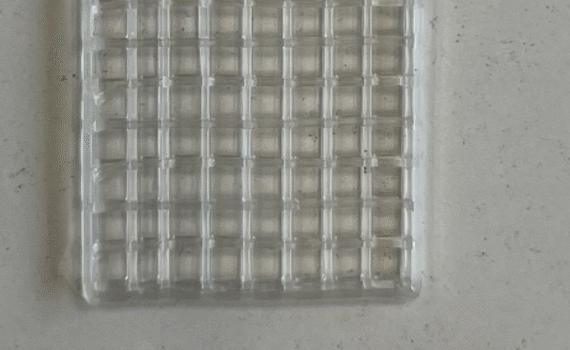
+10 Polylactic acid (PLA) and polycaprolactone (PCL) are two of the most widely used materials in tissue engineering, due to their properties. PLA is known for its high rigidity, mechanical strength and biocompatibility, while PCL is valued for its flexibility, longer degradation time and excellent thermal processability. However, the use […]
Application
12 posts
+10 INTRODUCTION Synthetic hydrogels are chemically defined animal component and pathogen-free hydrogels with tailored biological, mechanical and rheological properties for 3D bioprinting. Their synthetic origin avoid batch to batch variations, giving users the confidence to achieve reliable and consistent results with potential for clinical translation. Amongst the different options in […]
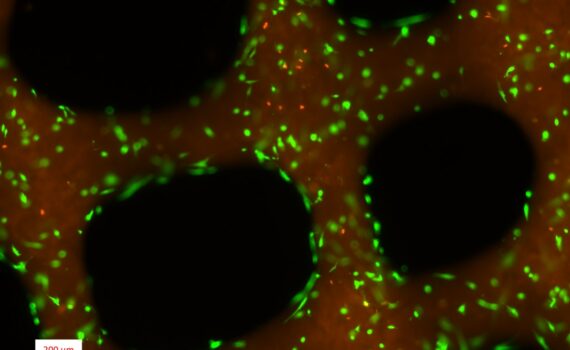
00 INTRODUCTION Gelatin hydrogels have attracted significant attention in the field of regenerative medicine, and more specifically, in their use as wound dressings and artificial tissue replacements. Among the different photo-crosslinkable gelatin materials, gelatin methacryloyl (GelMA) hydrogels display a series of advantages, such as good biocompatibility (including biosafety and biological […]
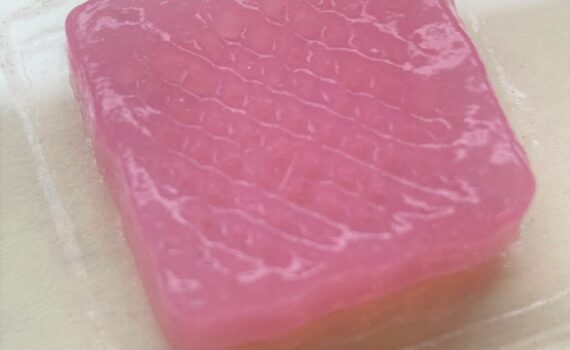
+20 INTRODUCTION Collagen is the most abundant structural protein in the extracellular matrix (ECM), accounting for 30% of the total body protein content in humans. Amongst the 28 types of collagen that have been already identified, collagen type I is the most abundant by far, playing its most prominent functional […]
+10 INTRODUCTION Alginate is a FDA-approved natural polysaccharide extracted from brown algae with multiple applications in the food, cosmetic, and pharmaceutical industries. Its outstanding features including high biocompatibility, ease of gelation, tailorable rheological properties and degradation kinetics make it ideal for 3D bioprinting applications. Alginate hydrogels can be ionically crosslinked […]
00 “Next generation gelatin-based bio-ink.” Introduction X EASYGEL INX© is a gelatin-based shear thinning, cell-interactive ECM mimicking ink. X EASYGEL INX combines all the benefits of conventional gelatin/gel-MA based inks in combination with a highly improved printing process thanks to its shear thinning behavior, as schematically presented in Figure 1a. […]
+20 “Stability for Long Lasting Support.” Introduction X Stable INX© is a synthetic shear thinning, cell-interactive scaffold ink. X Stable INX allows an easy printing process thanks to its shear thinning behavior, as schematically presented in Figure 1a. At high shear rates, it exhibits a low viscosity which is favorable […]
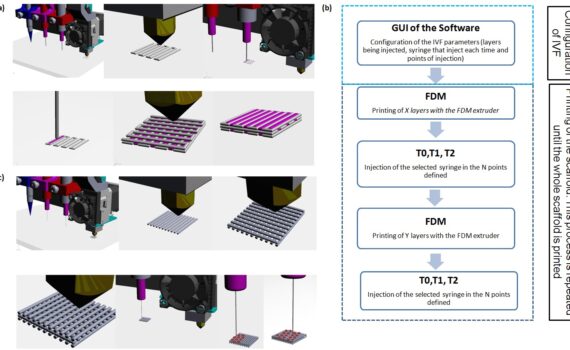
+5-1 The biofabrication technique comprises two processes for every volume: first, the fused deposition of the thermoplastic polymer to obtain the scaffold and second, the injection of the bioink and CaCl2 solution to fill the printed scaffold. Firstly, commercial non-medical grade PLA (1.75 mm filament) was used and it […]
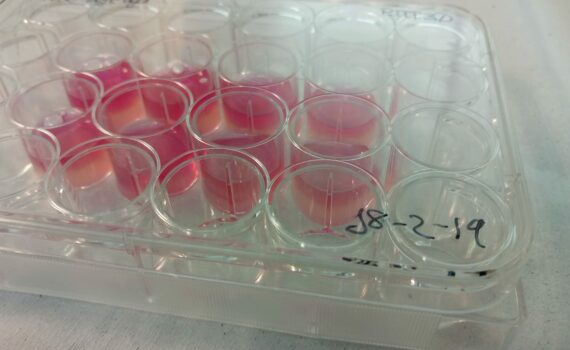
+100 Introduction: Injuries to the knee meniscus commonly lead to osteoarthritis. Current therapies for meniscus regeneration, including meniscectomies and scaffold implantation, do not achieve complete functional tissue regeneration. This has led to increased interest in cell and gene therapies and tissue engineering approaches to meniscus regeneration. The implantation of a […]

+30 3cc X- gel-Ma INX ready-to-use syringes were loaded and the bioprinted using the V1 REGEMAT3D bioprinter, equipped with the REGEMAT3D Designer Version 1.5, REGEMAT3D, Granada, Spain. Grids having a 10mmx10mm in width and length and 1mmx1mm as pore size were printed directly on the glass for testing purposes. The […]